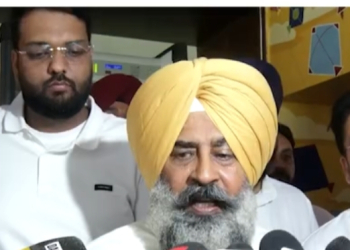
Bains said that during his years of reporting in militancy-hit Punjab, he had exposed several alleged fake encounters and human rights violations. “The Khalra case was the biggest challenge and the highest point of my journalism career,” he said.
The breakthrough in the case came through a chance meeting with Kuldeep Singh, a Special Police Officer (SPO) posted at the Jhabal police post under SHO Satnam Singh. Kuldeep Singh, who was serving on a temporary basis, told Bains that he had been promised a regular appointment as a constable in return for assisting the police but was later denied the job. According to Bains, Kuldeep also said he was being threatened to remain silent about what he had witnessed.
During a series of meetings, Kuldeep Singh narrated in detail the events surrounding the alleged illegal detention and killing of Jaswant Singh Khalra. According to his account, Khalra was kept in illegal custody at the Jhabal police post and subjected to severe torture.
Kuldeep Singh alleged that on the day of the killing, Khalra repeatedly asked for water. As Kuldeep went to fetch water, SHO Satnam Singh allegedly shot Khalra in the chest and then in the head. Kuldeep claimed that several police officials were present at the time, including DSP Jaspal Singh, Arvinder Singh, Surinderjit Singh, Jasbir Singh, Prithipal Singh and Balwinder Singh alias Ghora.
According to Kuldeep Singh’s statement to Bains, the policemen then transported Khalra’s body for disposal in the Beas River near Harike Pattan. He further alleged that after the killing, the police party assembled at the Harike Rest House where the then Tarn Taran SSP Ajit Singh Sandhu was waiting. There, according to Kuldeep, the officers consumed liquor late into the night to celebrate the operation, while he and other gunmen were also given bottles of liquor.
Kuldeep Singh also alleged that before the killing, SSP Ajit Singh Sandhu had personally interrogated and assaulted Khalra, warning him against collecting affidavits documenting alleged police excesses.
In another sensational claim, Kuldeep alleged that on October 1, 1995, Khalra had earlier been taken to a house belonging to a Sadhu at Mannawala, where the then Punjab DGP K.P.S. Gill was allegedly present. These allegations, however, were never established in court, and Gill consistently denied any involvement in the case.
Kuldeep Singh also narrated how he had earlier helped the police arrest Kashmiri militants while working as a tubewell operator at the Nathpa Jhakri hydro-electric project. He said he had been promised a permanent police job by Ajit Singh Sandhu, who was then serving as an SSP in Ropar, but the promise was never fulfilled.
Realising the gravity of his disclosures, Kuldeep Singh repeatedly expressed fear for his life. According to Bains, he sought CRPF protection after deciding to become a witness in the Khalra murder case. However, he alleged that the then Tarn Taran SSP Jasminder Singh obtained a written statement from Kuldeep saying that he did not require such protection. Some time later, Kuldeep Singh was found dead under mysterious circumstances. His death was never fully investigated, adding another unanswered chapter to the Khalra case.
The reports published by The Indian Express based on Kuldeep Singh’s disclosures brought the alleged custodial killing of Jaswant Singh Khalra into the public domain for the first time. The revelations triggered national attention, intensified demands for an independent investigation and eventually formed part of the chain of events that led to the prosecution of several Punjab Police officials.
Jaswant Singh Khalra had disappeared on September 6, 1995, while investigating thousands of alleged illegal cremations of unidentified bodies in Amritsar, Tarn Taran and Gurdaspur districts. Courts later held that he had been abducted and murdered in police custody. Several police officials were convicted in the case, making it one of India’s most significant human rights prosecutions.
The newly released film Satluj, starring Diljit Dosanjh as Jaswant Singh Khalra, recreates many of these events. Significantly, it also includes a visual reference to the first Indian Express report that exposed the alleged police role in Khalra’s disappearance and murder.
For Satinder Bains, the film is a reminder of the risks faced by journalists reporting during Punjab’s militancy years.
“Many stories tested my resolve as a reporter, but the Khalra investigation was unlike any other. It was dangerous, challenging and required immense courage from everyone who came forward. Seeing the story finally reach audiences through Satluj gives a sense of closure, but it also reminds us that journalism has a duty to uncover the truth, no matter how difficult the circumstances,” he said.