

Niti Aayog proposes global licensing framework to boost Ayurveda
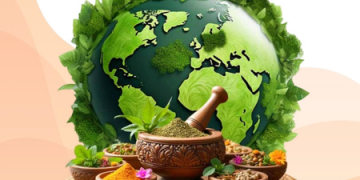
New Delhi, July 2 (IANS/WISHAVWARTA) Niti Aayog on Thursday unveiled a strategic roadmap to accelerate the globalisation of Ayurveda, saying that expanding the traditional system of medicine worldwide can unlock significant opportunities in healthcare, wellness products and medical value travel while strengthening India’s position as a global leader in traditional medicine.
In its report titled Strategic Roadmap for Making Ayurveda Global, Niti Aayog said Ayurveda is already a well-recognised and regulated traditional system of medicine in India and has steadily expanded its international footprint through government initiatives, bilateral collaborations and academic partnerships.
The report said Ayurveda is now formally recognised in nearly 30 countries through different licensing models, academic collaborations and inclusion in national health policies.
However, it noted that global expansion remains uneven and requires a structured strategy to improve international acceptance and accessibility.
According to the report, Ayurveda has the potential to generate substantial economic benefits by boosting markets for health products, wellness services and medical value travel.
The study adopted a mixed-methods approach combining secondary research with extensive consultations involving government ministries, regulatory bodies, industry associations, academic institutions, research organisations, manufacturers, service providers and international organisations.
Niti Aayog said the roadmap is built around three pillars — Availability, Acceptability and Propagation — covering areas such as workforce development, manufacturing and exports, research, education, regulatory compliance, insurance coverage, cultural adaptation, branding and global visibility.
The report highlighted that India has a strong domestic ecosystem with more than 355,000 trained Ayurveda practitioners, although around 95 per cent of qualified professionals continue to be based within the country, limiting international practitioner availability.
It noted that Ayurveda products are currently exported to around 150 countries, with exports rising from USD 1.09 billion in 2014 to USD 2.16 billion in 2023. However, most products are marketed overseas as dietary supplements because of regulatory constraints, limiting the export of finished Ayurvedic pharmaceutical products.
The report also said international Ayurveda research now spans nearly 70 countries, supported by global institutional collaborations and the World Health Organization Global Traditional Medicine Centre in Jamnagar. India has also awarded scholarships to 277 international students from 32 countries and established Ayush academic chairs in universities abroad, although globally standardised Ayurveda curricula are still evolving.
–