High-altitude centre will help Himalayan health challenges: JP Nadda
Keylong, Oct 12 (IANS/WISHAVWARTA) Union Minister for Health and Family Welfare Jagat Prakash Nadda on Monday laid the foundation stone of the ICMR Centre for High Altitude Medicine and Public Health Research, saying the Centre would establish a strong institutional foundation for health research and advance scientific understanding of the unique health challenges faced by people living in the Himalayan region.
Speaking on the occasion, Nadda emphasised the importance of dedicated scientific research to understand the health implications of low oxygen levels, extreme cold, changing climatic conditions and the distinctive lifestyles of tribal communities.
He highlighted the need for systematic studies of these region-specific challenges to identify health risks, develop appropriate interventions and strengthen preventive healthcare.
Referring to Prime Minister Narendra Modi’s vision of strengthening healthcare infrastructure and ensuring access to quality healthcare, the Union minister said the establishment of the Centre reflected the importance accorded to addressing the distinct healthcare needs of people living in remote Himalayan and border regions.
He emphasised that research-based interventions would help improve health outcomes and enhance the wellbeing of local communities and armed forces personnel serving in these challenging environments.
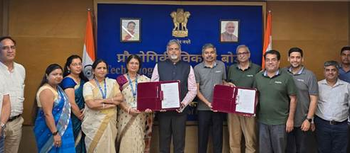
Nadda appreciated the collaboration between ICMR and the Armed Forces Medical Services in establishing the Centre.
He also acknowledged the contribution of AIIMS Bilaspur, which would participate in studying the health impact of high-altitude conditions on patients visiting the region. The collaboration would bring together scientific expertise and clinical experience to deepen understanding of high-altitude health challenges and support evidence-based healthcare interventions.
Emphasising the long-term significance of the initiative, Nadda said that the Centre would contribute to improving healthcare for tribal communities and armed personnel deployed in high-altitude areas. The research undertaken would support the development of appropriate preventive and promotive healthcare strategies, helping address the distinctive medical challenges associated with extreme environmental conditions and strengthening health services in the Himalayan region.
Nadda also appreciated ICMR’s role in developing the COVID-19 vaccine, which helped fight the pandemic not only in India but also in other countries around the world.
Union Minister of State for Defence Sanjay Seth, who was the guest of honour, highlighted the significance of the collaboration in establishing the High Altitude Research Centre in Keylong in Lahaul-Spiti district.
Drawing on the armed forces’ experience of operating in high-altitude environments, he expressed confidence that the joint research initiative would help deepen scientific understanding of the health challenges associated with extreme altitudes and contribute to the development of effective medical solutions.
Seth emphasised the importance of combining ICMR’s scientific research capabilities with the practical experience of the Armed Forces Medical Services to address the health challenges posed by high-altitude conditions. The research undertaken at the centre is expected to support a better understanding of the effects of altitude on the human body, with potential benefits for personnel serving in challenging environments as well as local communities living in the high-altitude regions of Himachal Pradesh.